The decision is the easy part.
The middle is where change dies.
New structure, new system, new strategy — announced in an hour, absorbed over a year. We work with you through that year: the phases people actually go through, the leaders who have to carry it, and the evidence that it landed.
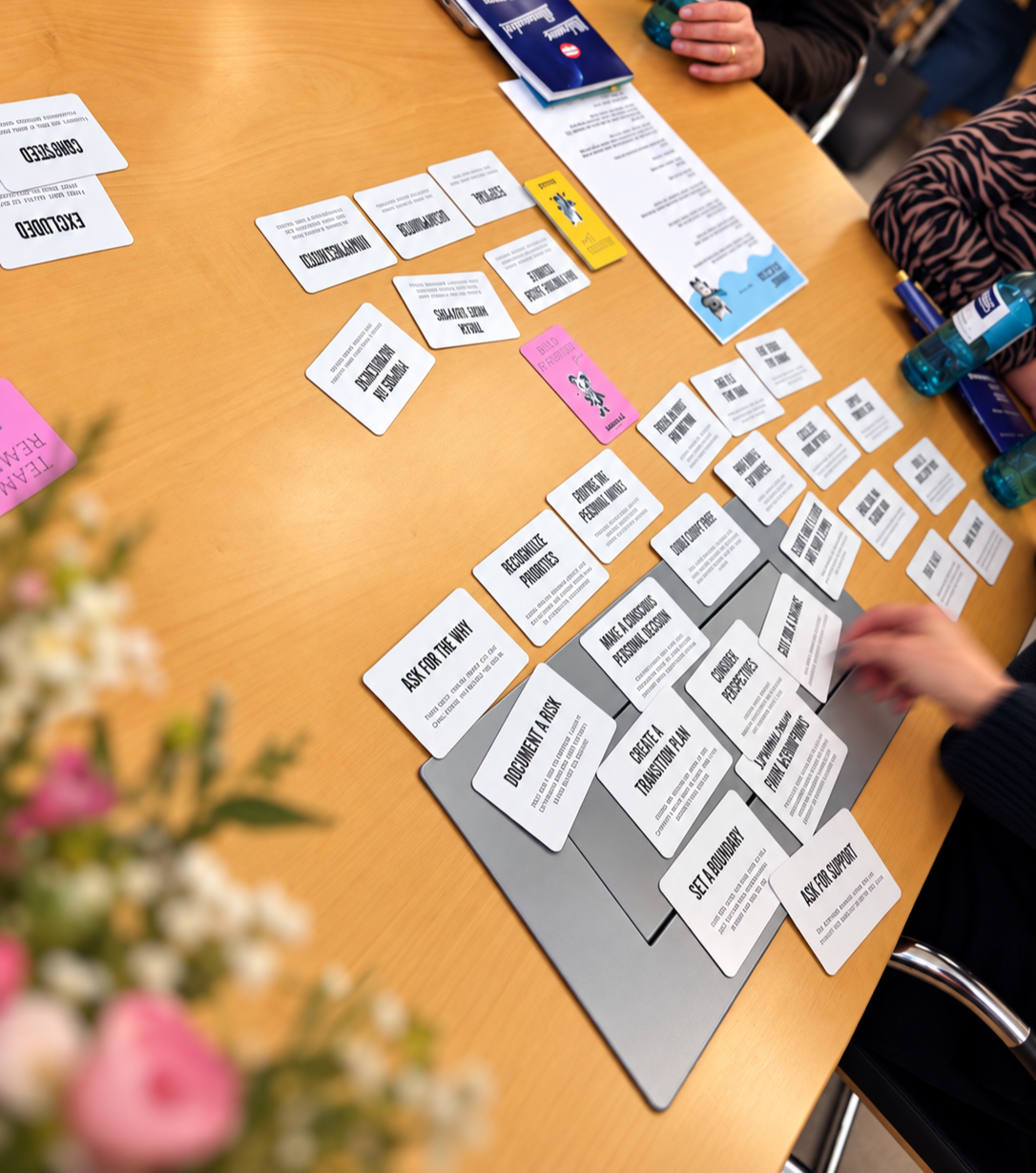
It is rarely resistance.
People don't refuse change because they like the old way. They stop because the reason was never clear, because their manager can't answer the obvious question, or because nothing in their week actually changed. Four patterns account for most of it.
Strategy sets the course.
Psychology gets the crew on board.
Every change has a plan side and a people side, and they fail separately. We work both: the structural decisions — targets, processes, decision rights, who owns what — and the psychological ones — what each group stands to lose, what makes it safe enough to move, and which motives your plan is quietly working against.
A perfect plan still doesn't sail with half the crew on the quay. All hands on deck is a condition, not a slogan.
Everyone dips. The question is how long.
Performance and mood drop after an announcement — that part is normal and not a management failure. What you can influence is the depth of the dip and the time spent in it. Pick a phase to see what is happening and what we do there.
The trough
The old way is gone, the new way isn't real yet. Productivity dips, informal opposition organises, and the people with the most to lose get loudest. This is the normal middle, not a sign the plan was wrong.
The dip is treated as resistance to be overcome. Critics are labelled instead of heard — which turns individual doubt into a group position.
We make the objections visible and workable: listening formats, sceptic conversations, and clear separation of what is genuinely open from what is decided. Leaders get sparring, not scripts.
Four groups, four different jobs.
Change programs usually over-invest in the people already convinced and under-invest in the ones with the power to quietly stop it. We map your stakeholders on influence and support, then give each group a job that fits.
The silent majority is the largest group and the one that decides the outcome. It doesn't follow the town hall — it follows the multipliers standing next to it.
One possible route.
There is no standard programme, so read this as an example rather than a method. It is a route we often take, and it shows what the work involves. Where we start, and in which order, depends on what we find and on how much time you have.
Before we design anything, we measure where the organisation stands: room to act, learning culture, speed, customer distance — surveyed across levels, not just at the top. The gaps tell us where this change will get stuck.
One narrative that holds up in a town hall and in a corridor: why now, what it means concretely, what ends. Written with your leadership team so they own the words instead of reading ours.
Middle managers do the actual change work. They get the objections they will face, the conversations they will have to hold, and a place to practise both before it counts.
We identify the people others already listen to, bring them in early with real influence on the design, and give them something concrete to carry into their teams.
Goals, rituals and onboarding get updated so the new way survives without attention. Then we run the same diagnostic again and compare — evidence rather than a feeling that it went well.
In an urgent reorganisation we sometimes start at 02 and measure afterwards. In a culture programme, step 01 alone can take a quarter.
Five ways to work with us.
From one confidential sparring call to a licensed programme your own people run. Most clients combine two or three — and the last one is designed to make us unnecessary.
We design the change with you and stay through the delivery: architecture, communication, sequencing, and the decisions that keep getting postponed.
A confidential second opinion for the person carrying the change. Regular sessions, no audience, no minutes — where you can say the thing you can't say in the steering meeting.
Your managers learn to run the messy middle: holding the objection, communicating without answers to everything, keeping a team working through the trough. Practised in simulations first.
We take a seat in your steering body and hold the method: challenging the plan, keeping the people side on the agenda, and saying the uncomfortable thing when everyone else reports green.
We certify your own change agents and license the material to you — your people run the change internally, with our framework, tools and quality standard behind them.
Change is never a standalone project.
It sits on top of a strategy people can repeat, a set of goals that make the new direction visible, and leaders who have the skills for the messy part. Most of our change work runs alongside one of these.