Change has a process side and a people side.
We train both.
Milestones, roles and communication plans are the visible half. The other half is what people stand to lose and which motives your change is quietly working against. We work on your own upcoming change, from two perspectives: leading it, and living through it — with simulations and our own card games in between.
The plan side and the people side fail separately.
A phase model without psychology leaves a manager presenting a roadmap to a room that has already made up its mind. Psychology without structure leaves everyone with feelings and no sequence. In this training the two run side by side, on the same case.
A perfect plan still doesn't sail with half the crew on the quay.
The same motive can drive a change or block it.
Resistance is rarely about the change itself. It is about what the change does to a motive somebody runs on. In the training we go through the motives and sort them: which pull towards the new thing, which pull back, and what that means for how you talk to that person. Pick one.
Curiosity
The pull towards the new and the unknown. Generally positive about change: explores what is coming and wants to look at it early.
there is something genuinely new to understand, and people get to look into it early rather than be told the conclusion.
the change is presented as finished. Nothing left to explore means nothing left to be interested in.
Leading change, and being on the receiving end of it.
We build the training for whichever group is in the room: the people who decide and announce a change, or the people who have no direct say in it and still have to work with the result. Each version is a full training with its own card game and its own simulation scenarios. In mixed groups we run both, so each side sees what the other one is dealing with.
You have to sell it before you believe all of it.
Managers get a change handed to them and are expected to carry it, often without answers to the obvious questions. The work is holding the objection without folding, communicating when you do not know everything, and keeping a team functioning through the trough.
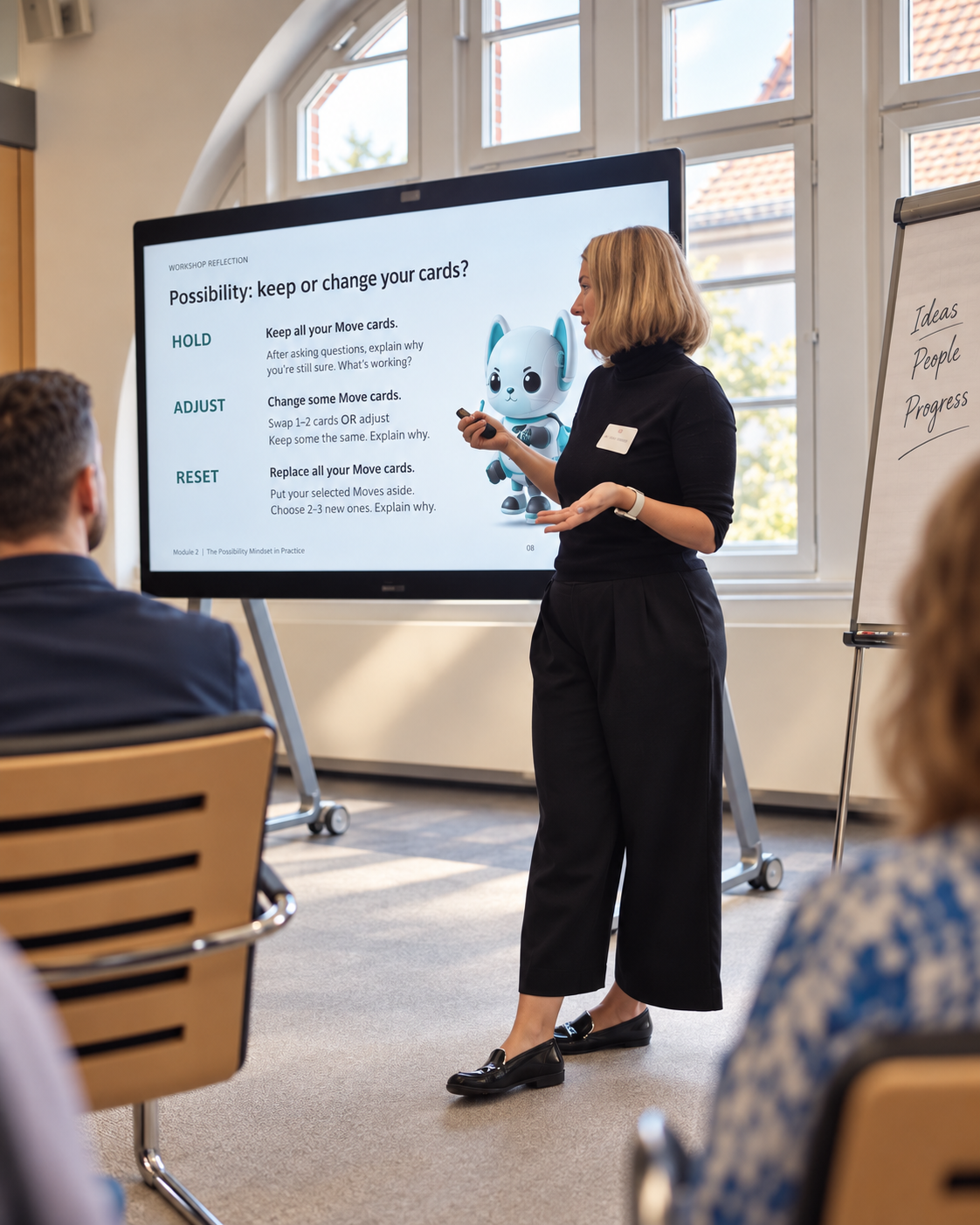
Two sides, two games, one simulation.
Change is easier to talk about than to do. So we let people do it first: digital simulations where decisions have consequences, and our own card games — one for the people leading a change, one for the people it happens to. The simulation carries scenarios for both.
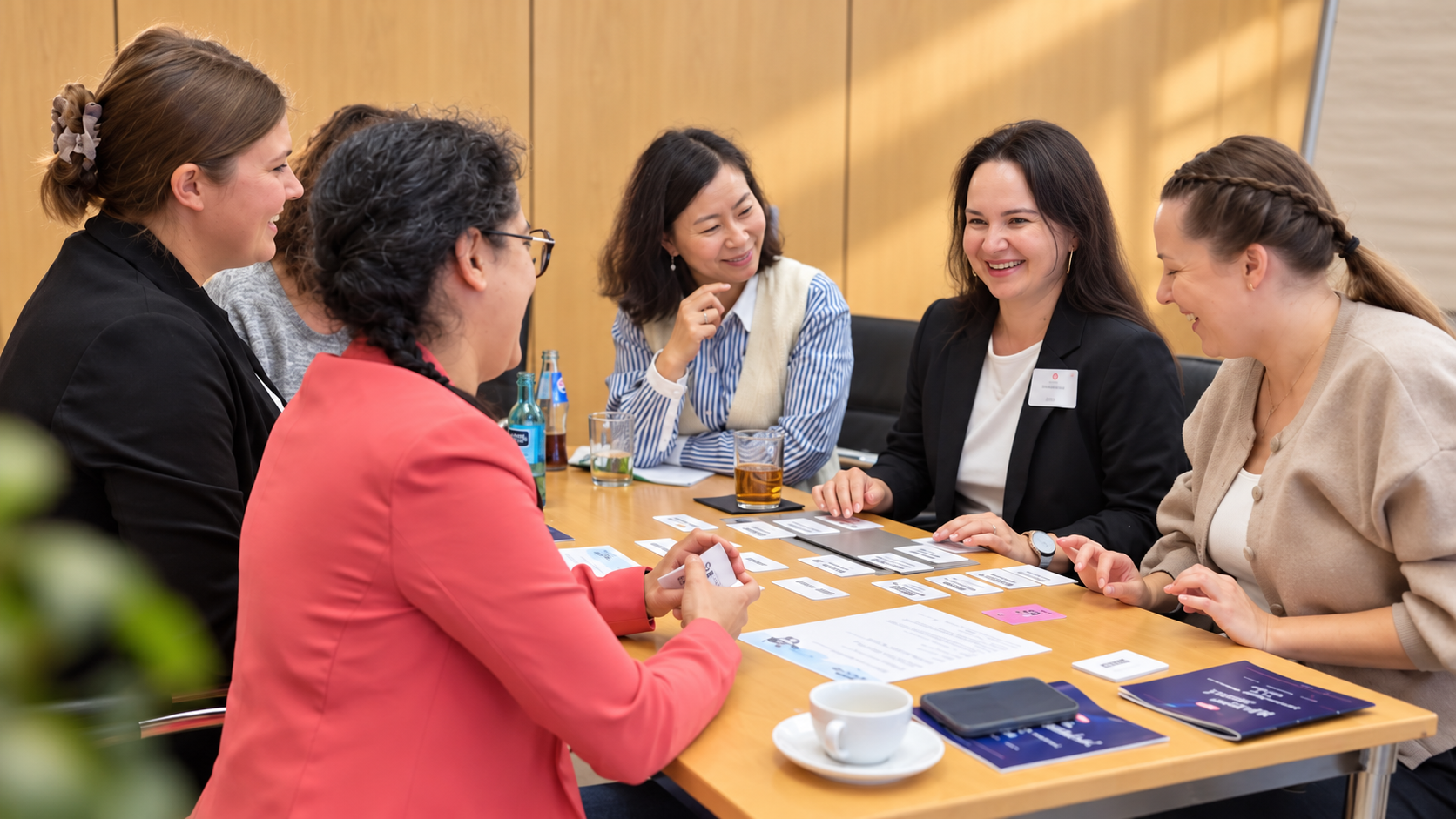
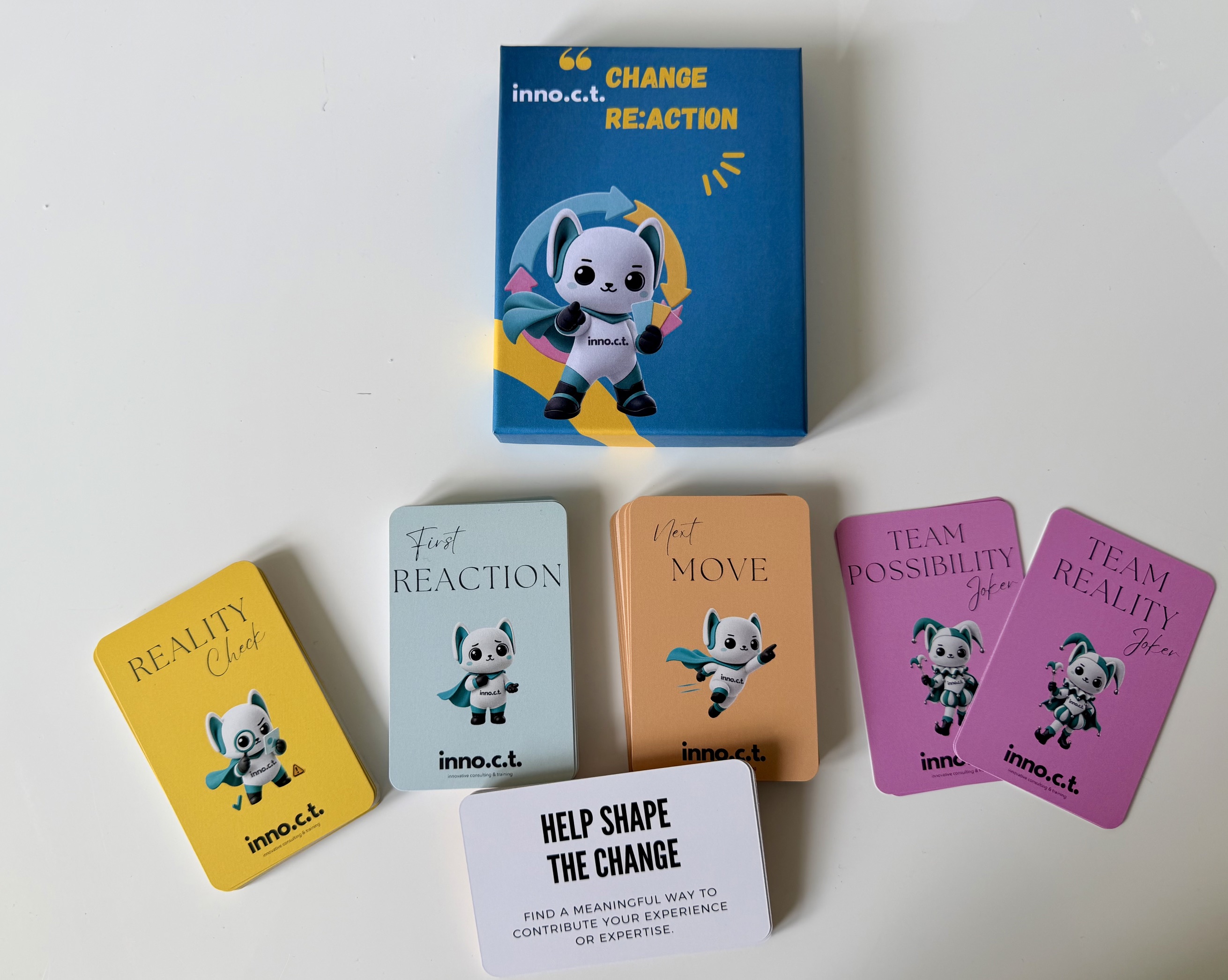
A change you are allowed to get wrong.
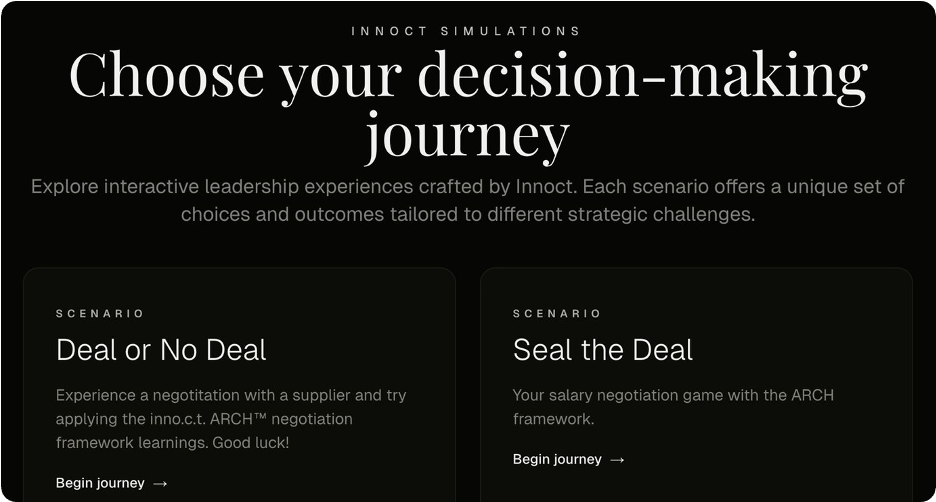
Alongside the card games we run digital simulations with a range of scenarios. Participants lead fictional stakeholders through a change and have to handle both sides of it: the process and the psychological resistance it produces. Which scenarios we use depends on the kind of change and on whether the group is leading it or living with it.
Small teams play against each other, each making their own calls on the same scenario.
After each chapter the groups stop, compare decisions and work through them with the trainer.
Bring the change you are in the middle of.
Tell us what is changing, who needs to carry it and where the process is getting stuck. Available for leadership groups, whole teams, and as a module inside a change programme or leadership curriculum.